
The Architecture of the Dosa
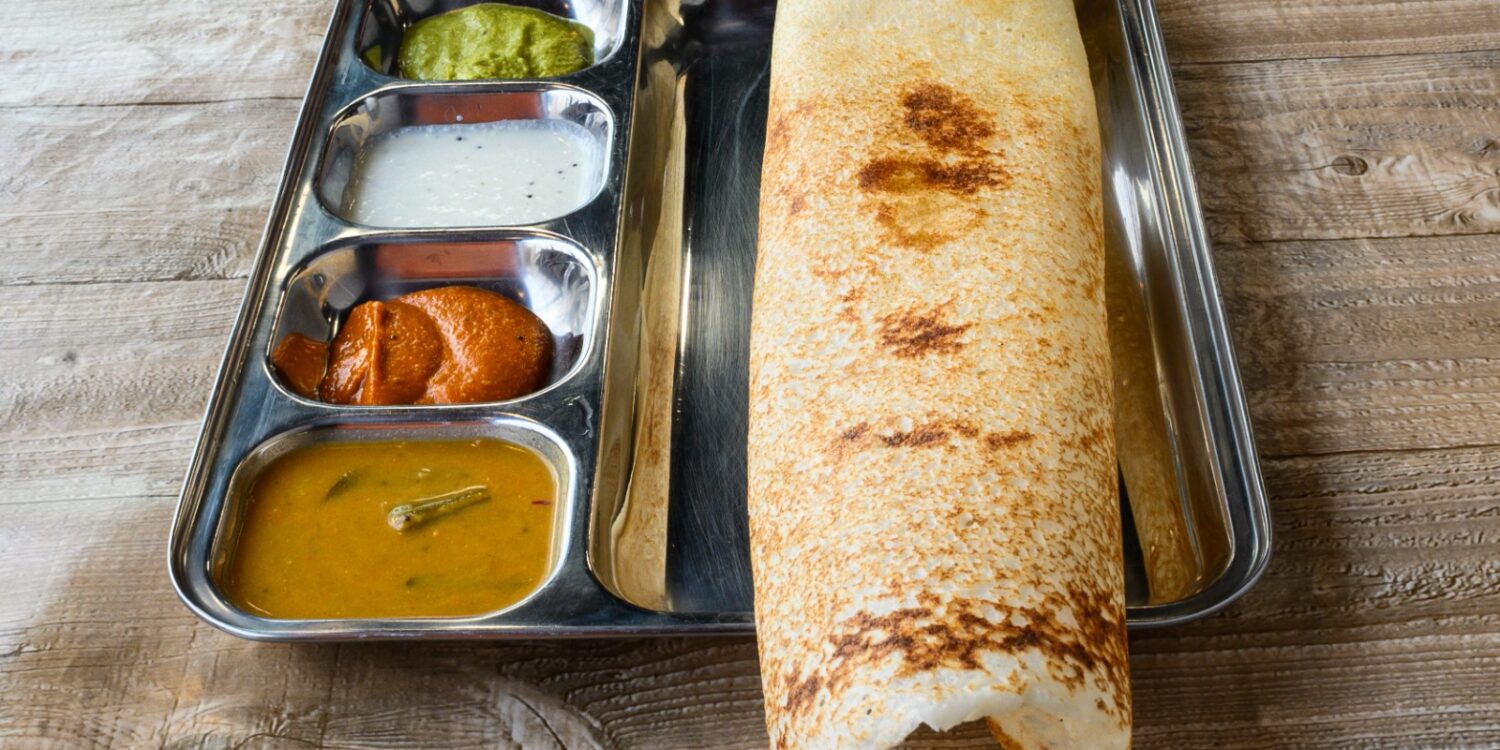
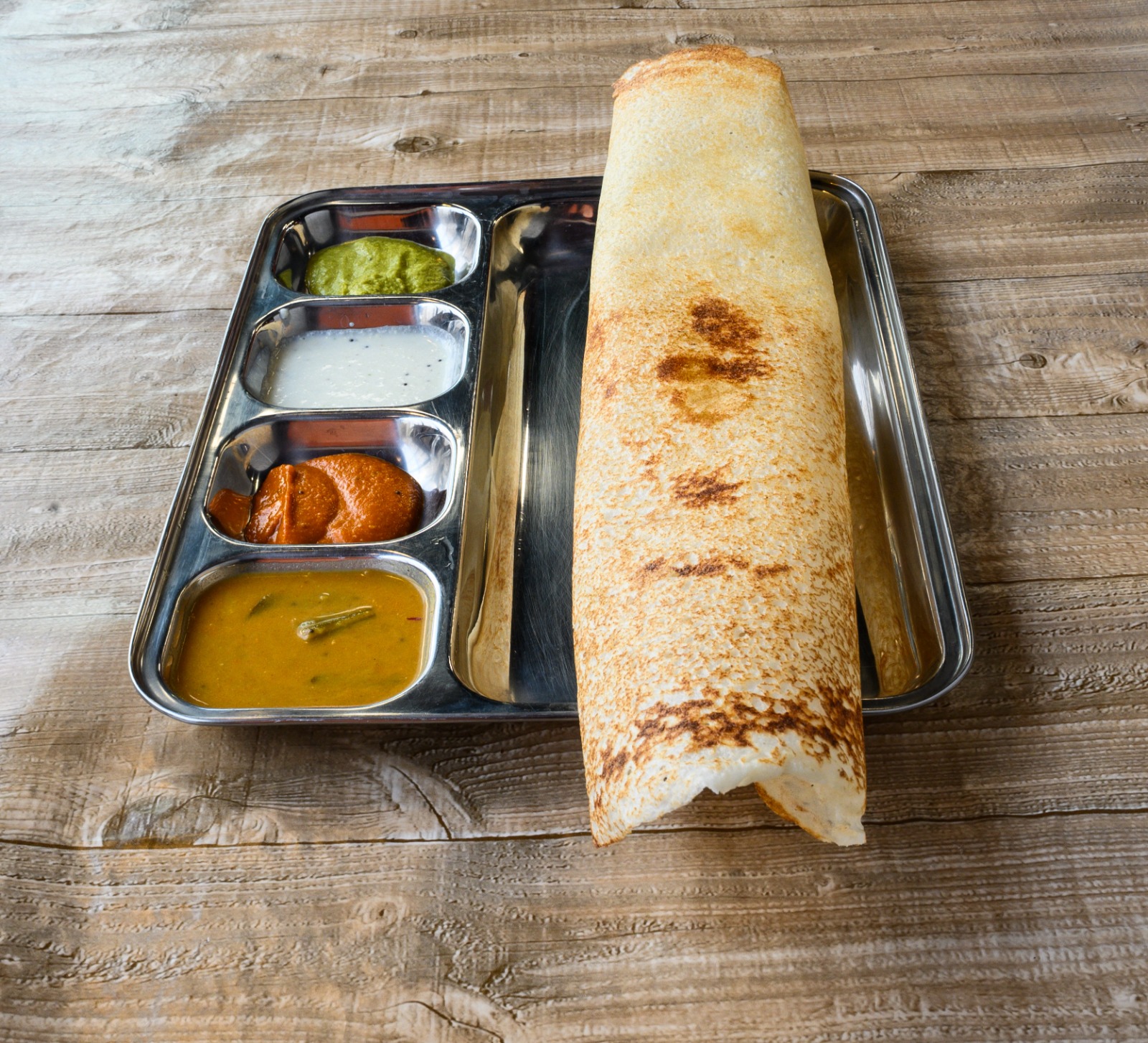
While it originated in the South, the Dosa has conquered the entire country. At its core, it is a masterclass in patience and fermentation. A batter of rice and black lentils (urad dal) is left to ferment until it develops that signature tang, then spread with practiced precision onto a scorching hot tawa.
The result is a golden, paper-thin crepe that manages to be both shatteringly crisp on the outside and soft on the inside. Whether it’s a simple Sada Dosa or the iconic Masala Dosa stuffed with a tempered potato mash, it is incomplete without its entourage: a spicy, lentil-based vegetable stew called Sambar and a cooling coconut chutney. It’s breakfast, lunch, and dinner all rolled into one perfect cylinder.
Samosa Chaat: The Beautiful Mess
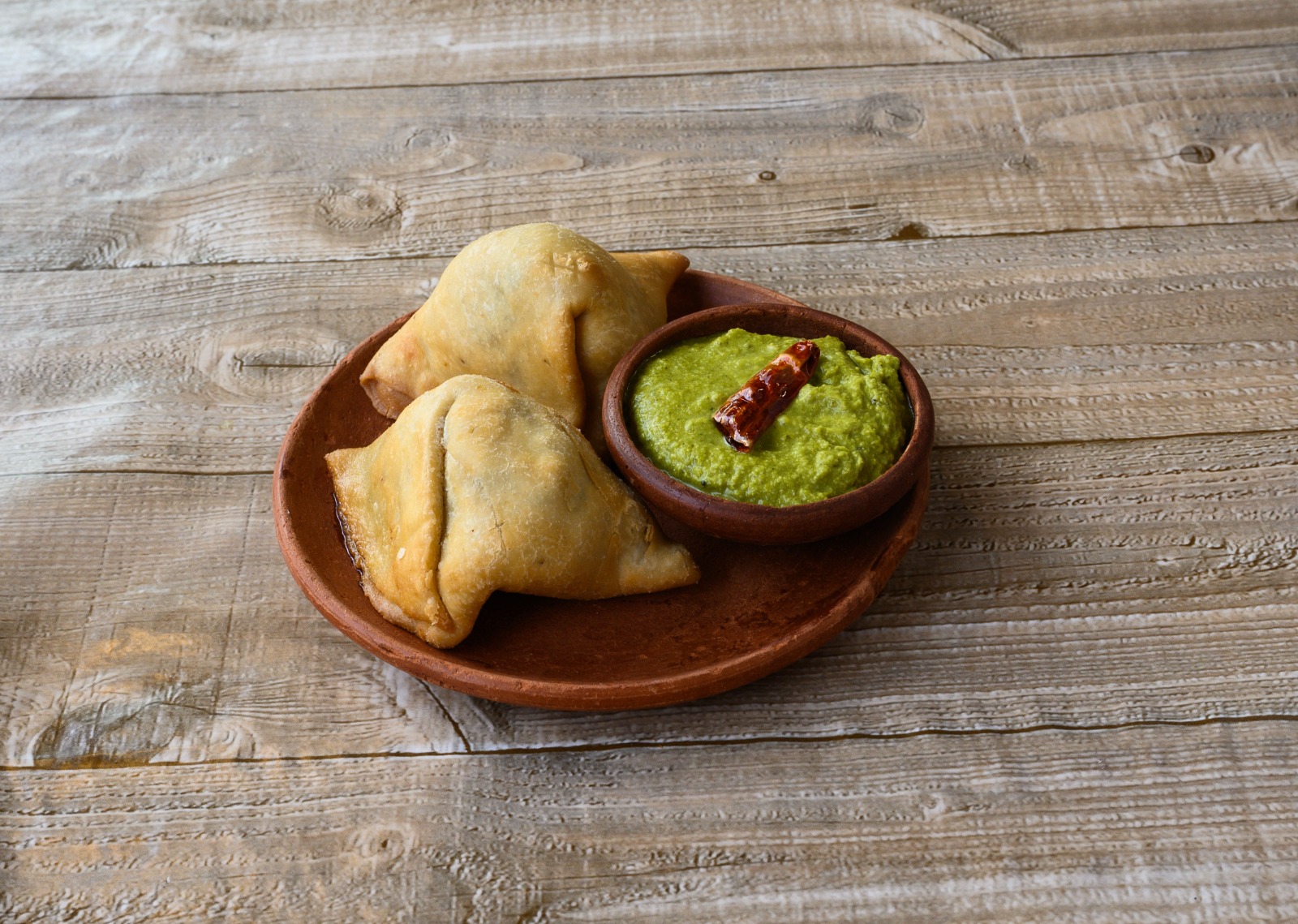
If the dosa is about elegance, Samosa Chaat is about delightful chaos. In Indian street food culture, “Chaat” represents a specific flavor profile: a frantic collision of sweet, spicy, tangy, and salty.
The process starts with a classic samosa—a flaky, deep-fried pastry filled with spiced potatoes and peas. But instead of being eaten plain, it is roughly smashed and drowned in a sea of:
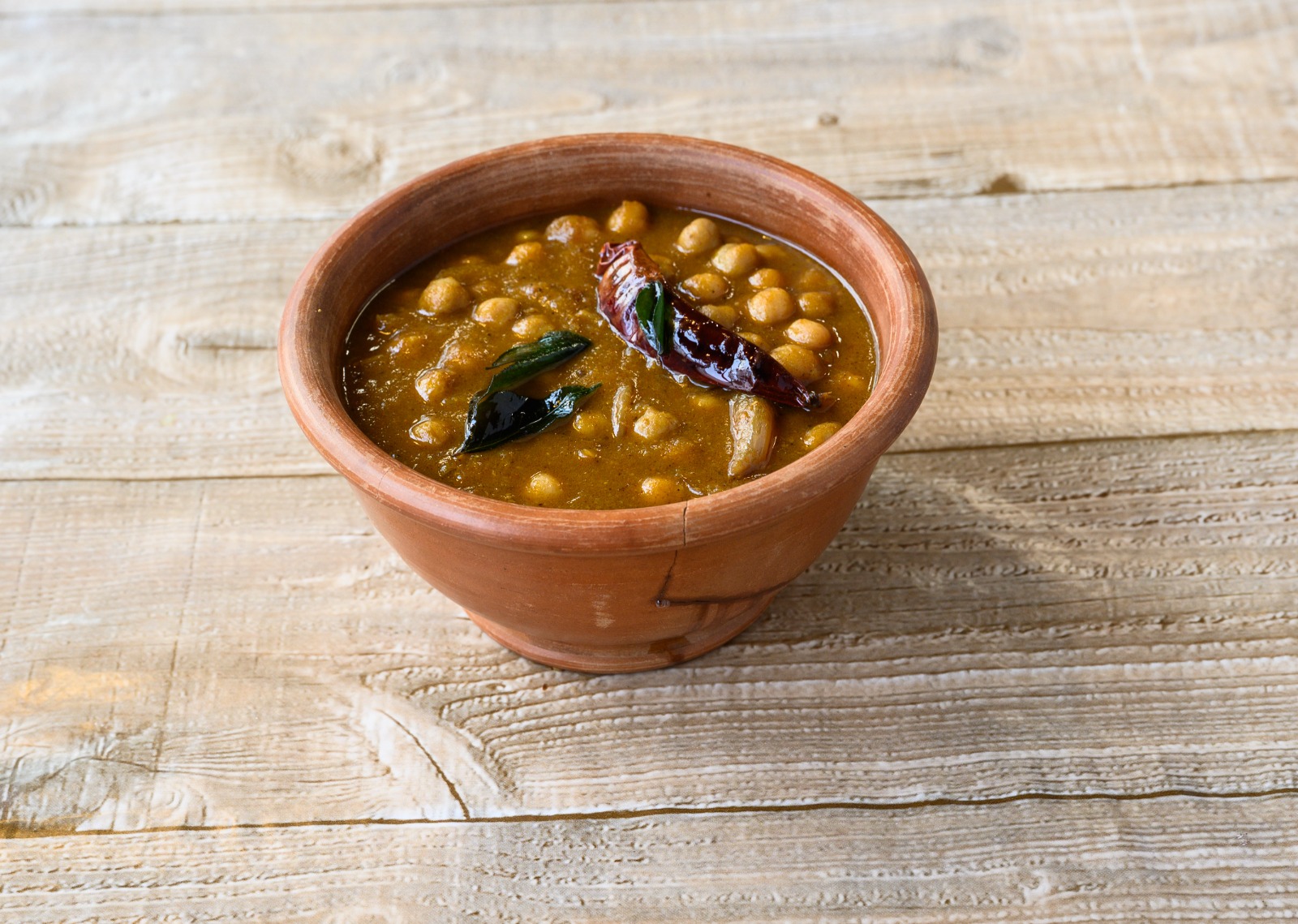
• Chana Masala: A hearty, spicy chickpea curry.
• Chutneys: Zesty green mint-cilantro and sweet-tart tamarind.
• Toppings: Fine, crunchy noodles (sev), chopped onions, and a dusting of chaat masala.
Every spoonful is a texture hunt. You get the crunch of the pastry, the creaminess of the yogurt, and the “zing” of raw ginger and pomegranate seeds. It’s messy, loud, and arguably the most addictive thing you’ll ever eat on a paper plate.
Biryani: The Royal Export
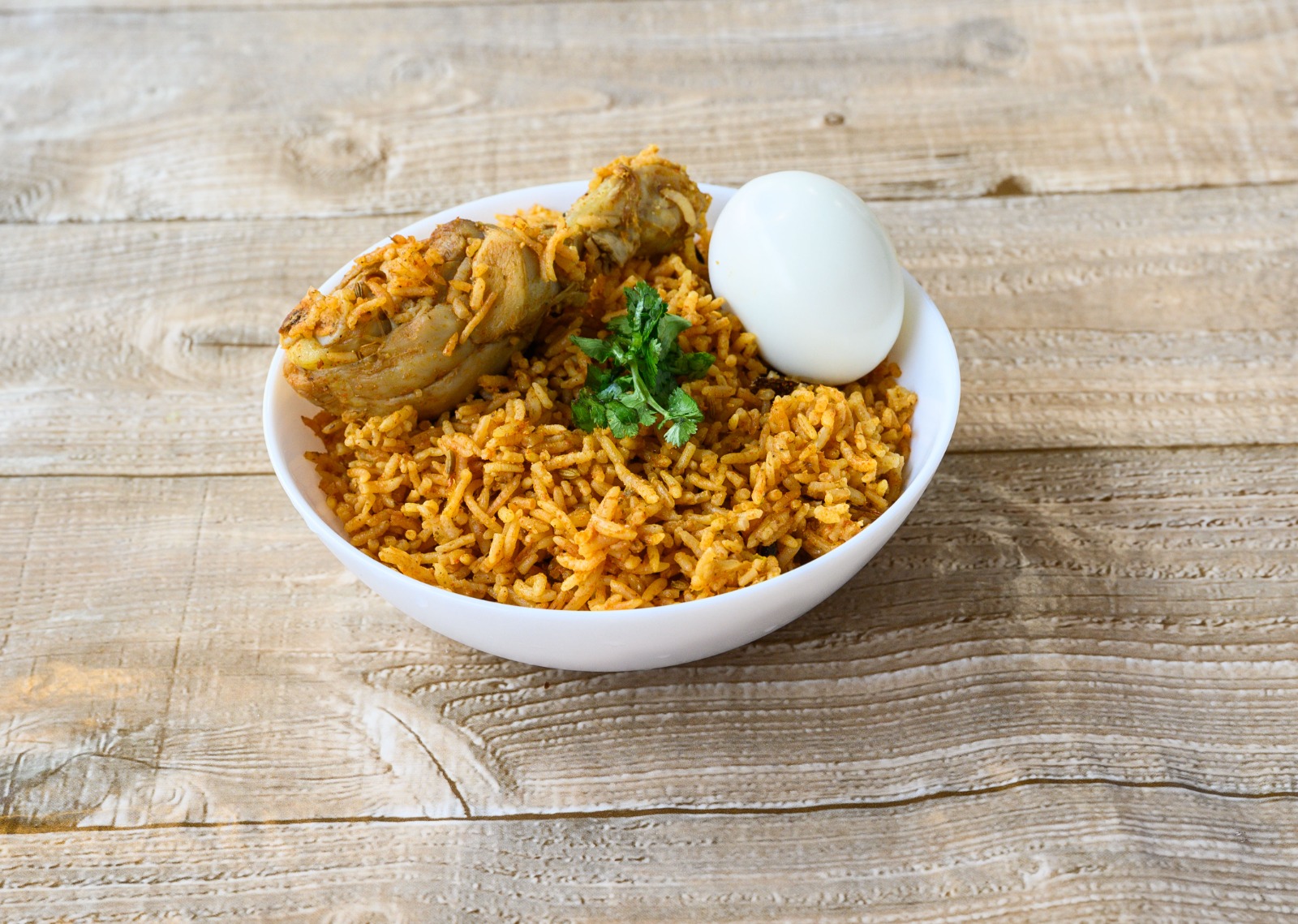
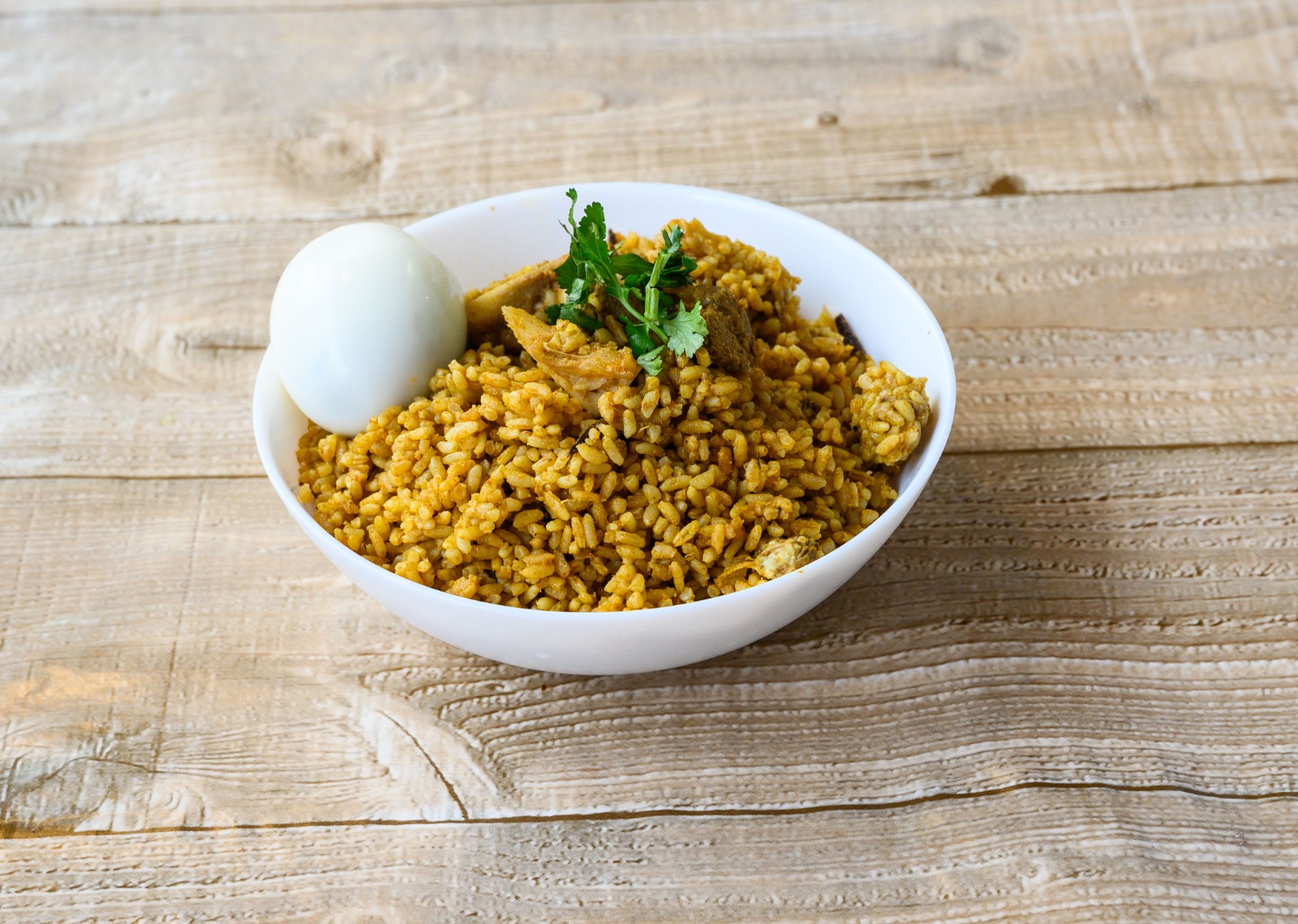
While often served in fine dining, Biryani finds its most authentic expression in the massive, cloth-covered cauldrons (handis) found on street corners. It is the undisputed king of rice dishes, brought to India by the Mughals and localized into dozens of regional avatars.
Whether it’s the spice-forward Hyderabadi style or the subtler, potato-inclusive Kolkata version, the secret lies in the Dum—a slow-cooking method where the pot is sealed with dough to trap the steam. This allows the long-grain basmati rice to absorb the essence of the marinated meat, saffron, and fried onions (birista). When the seal is broken, the aroma is enough to stop traffic.
Indian street food isn’t just about refueling; it’s a sensory performance. It’s the sound of the metal spatula against the griddle and the sight of steam rising into the evening air.